3D Scan & RE
3D scanning and reverse engineering services enable physical objects to be transformed into precise, editable digital CAD models, allowing for the creation of copies that are faithful to the original.
These solutions bridge the gap between the physical and digital worlds, proving particularly useful when spare parts, original designs or technical documentation are unavailable.
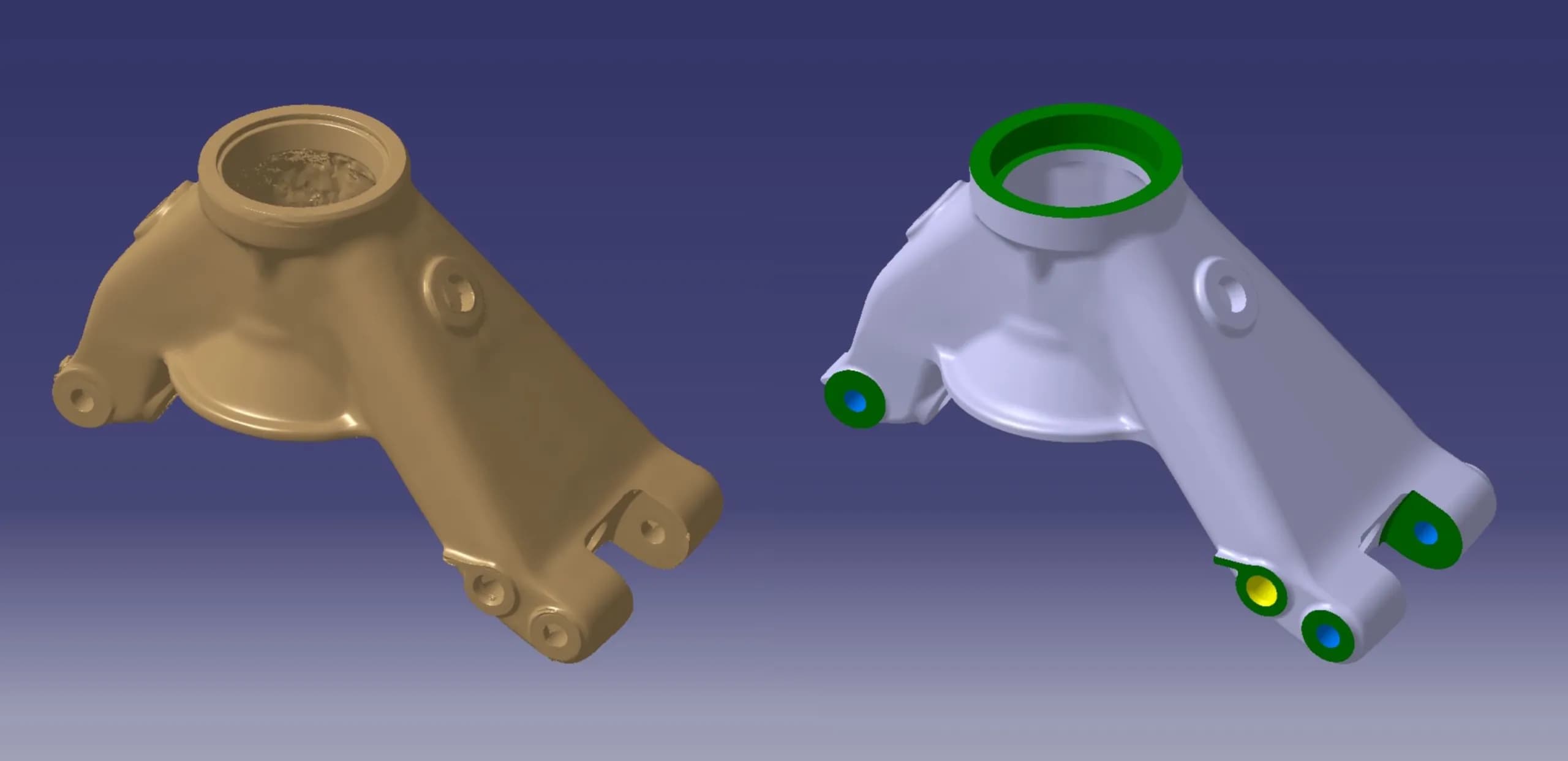
3D Scan & RE
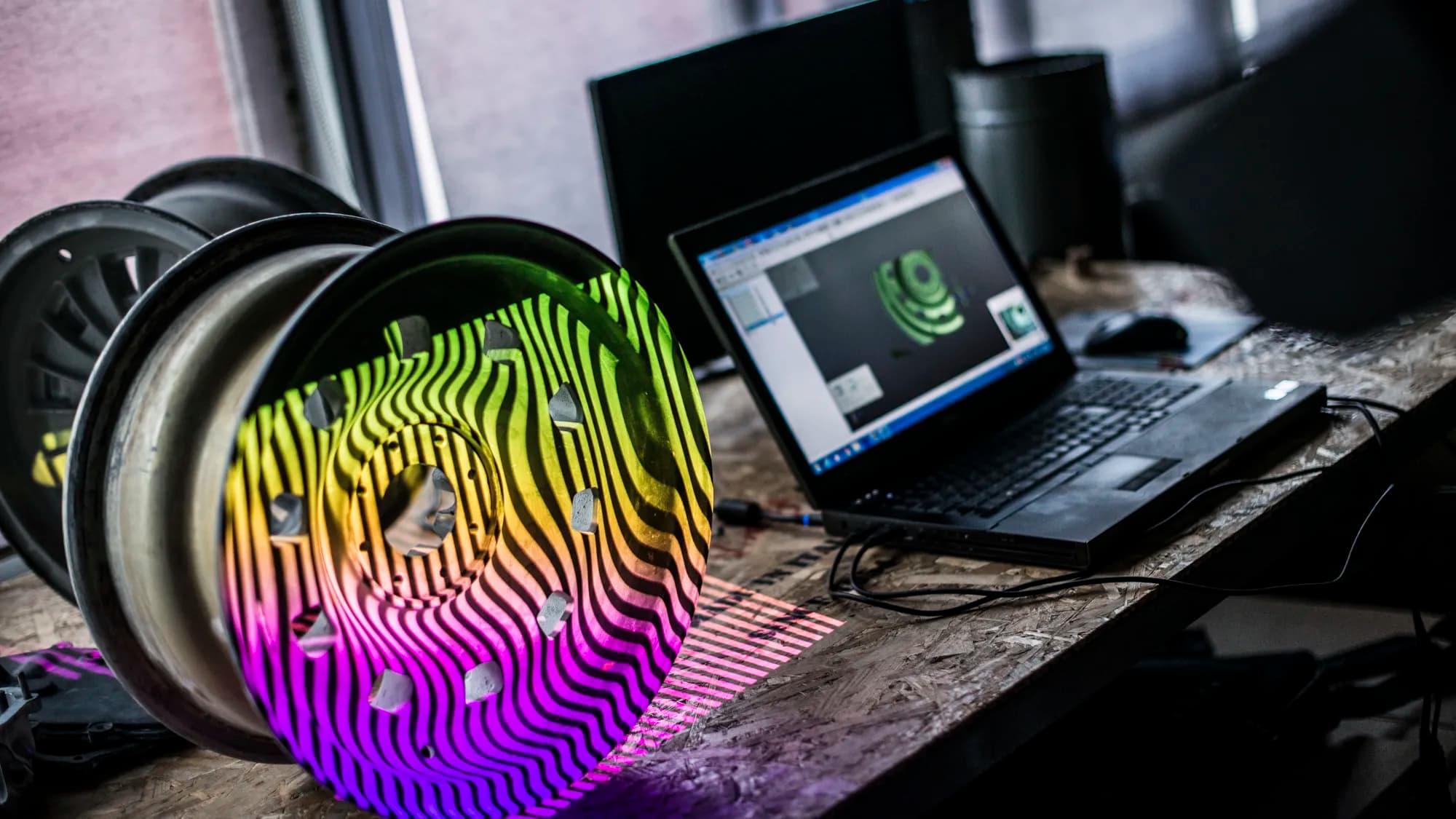
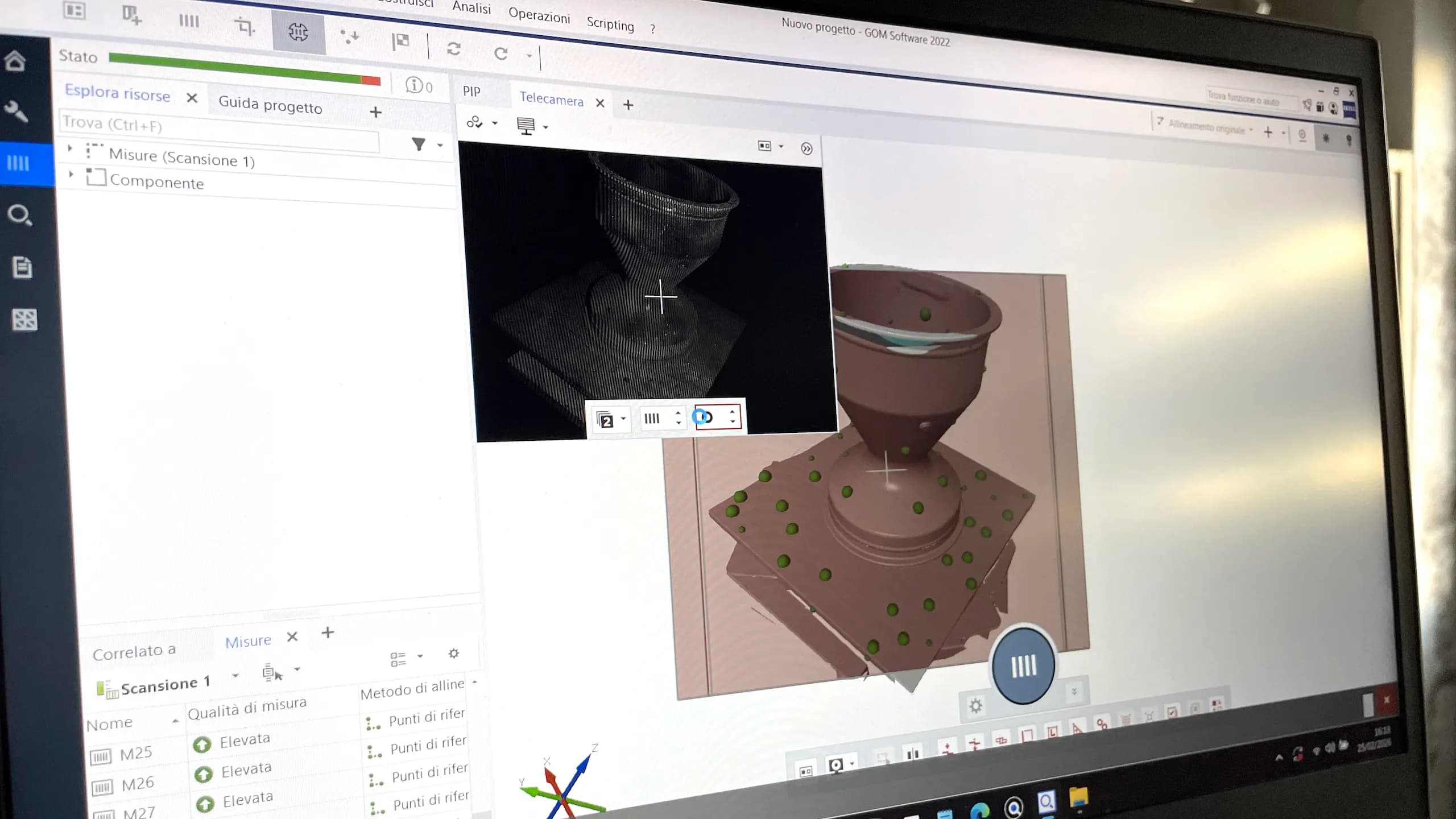
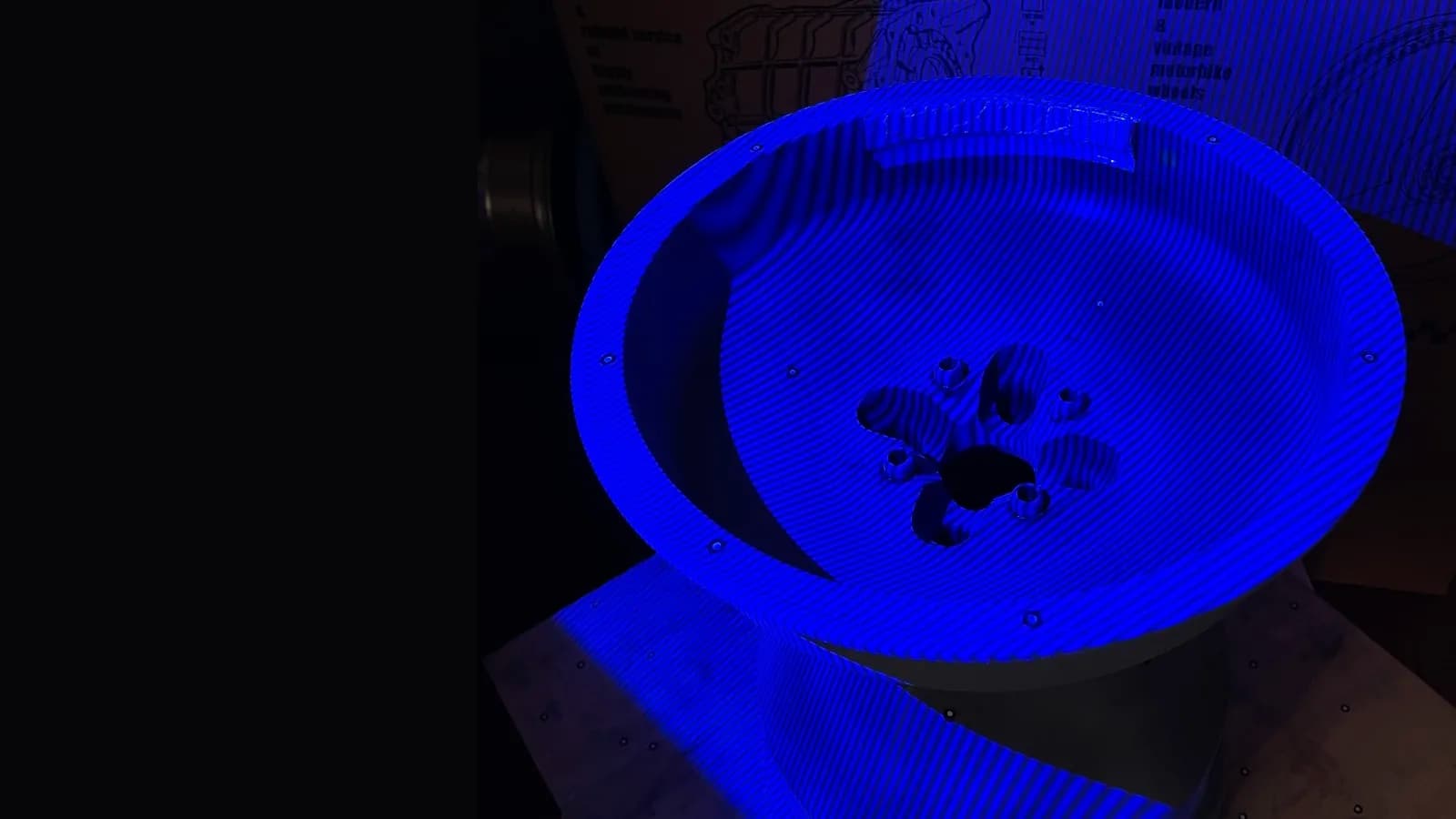
Using 3D scanning with a blue structured light scanner, shapes and finishes are captured with a level of detail down to hundredths of a millimetre, allowing even variations in texture to be recorded, making it suitable for applications where visual fidelity is also crucial.
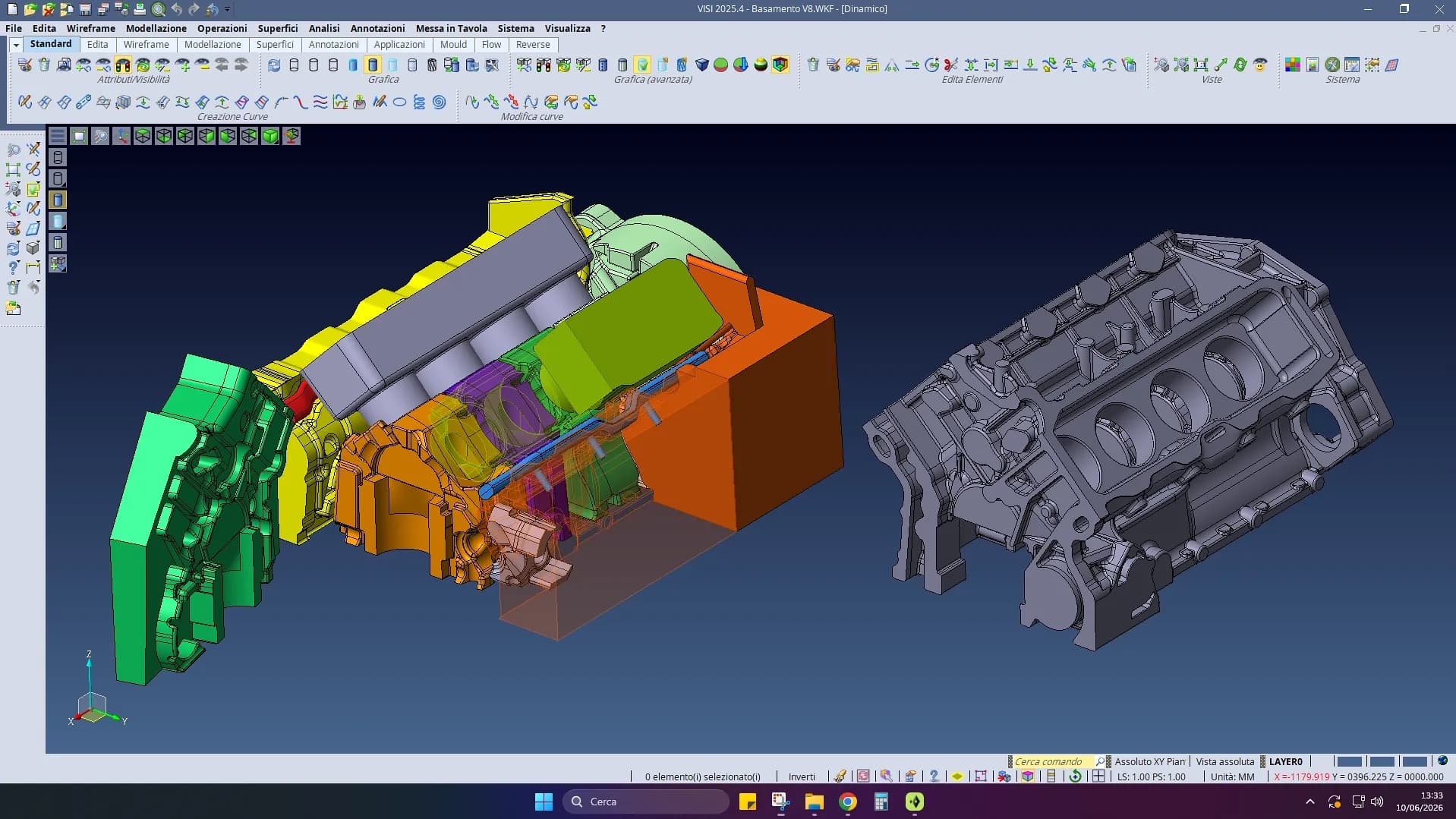
With the subsequent Reverse Engineering phase - that is, the creation of parametric models combined with the modelling of precise surfaces - it is possible to convert physical components into precise and accurate digital files, ideal for analysis, design or reproduction. Where necessary, using computed tomography, we carry out non-destructive testing for 3D geometric and functional analysis to reconstruct the structure of the part and assess assembly issues.
Using a structured light 3D scanner, it is possible to carry out three-dimensional scans capable of capturing the shapes of objects in a matter of seconds, thanks to a ‘point cloud’. The precision and high point density allow every surface detail to be captured. Processing the 3D scan generates STL polygonal models. The next stage involves creating 3D IGES files using powerful, dedicated reverse engineering software. From there, using CAD/CAM processes and CNC machines, a mould is produced for gravity sand casting.
Once the model has been produced, we can proceed to the production of castings, which are faithful replicas of the original sample. Where required, once the castings have been produced, we move on to pre-processing, inspections, machining, and finishing. This process enables us to resolve specific situations quickly and cost-effectively, such as the production of new equipment and castings based solely on a sample (particularly useful for the restoration of vintage cars and motorbikes, as original spare parts are often no longer available on the market), or even when it is necessary to ‘copy’ old, damaged foundry moulds for which no 3D files are available.
It is possible to replicate small, simple components such as clutch housings, but also more complex components and parts such as wheels, uprights, gearboxes, and many others.
Contact us for a quote!
Want more?