Processes
Main gravity sand casting systems
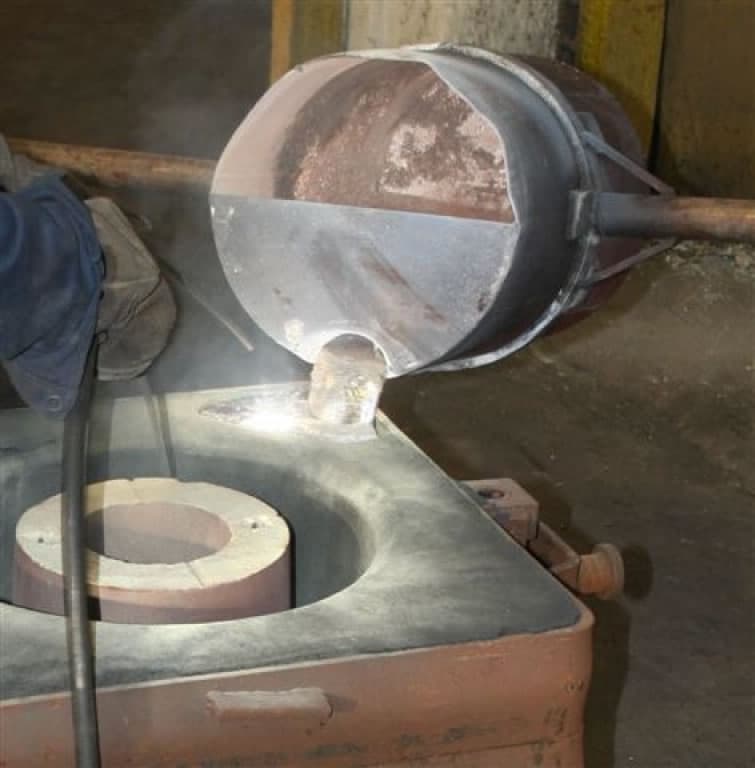
Gravity sand casting involves the creation of sand moulds and relies solely on the weight of the molten metal to fill the mould, which is poured manually using ladles.
Depending on the customer’s requirements, the desired surface finish and the geometric complexity of the component, various moulding methods can be used.
The company offers three of the main systems.
Green Sand
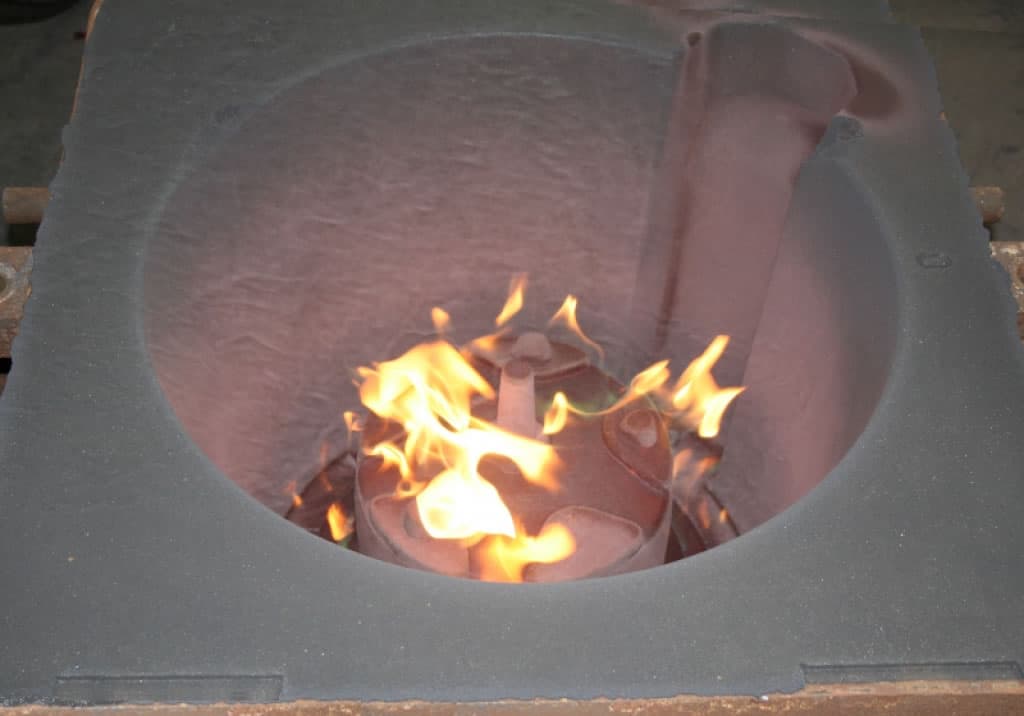
This is the most widely used, economical and traditional method for producing small and medium-sized castings.
The mixture used consists solely of silica sand, bentonite and water. The sand is pressed around the mould but is not dried, thus remaining in a ‘green’ state.
This process is relatively economical, as it allows the sand to be fully recycled. The surface of the casting faithfully reproduces the grain of the sand used, giving it the typical ‘orange peel’ appearance.
The company has an automated plant with four moulding machines. With this production process, wall thicknesses of up to 3.8 mm can be achieved.
Castings ranging in weight from a few grams up to approximately 100 kg can be produced.
Resin-bonded sand
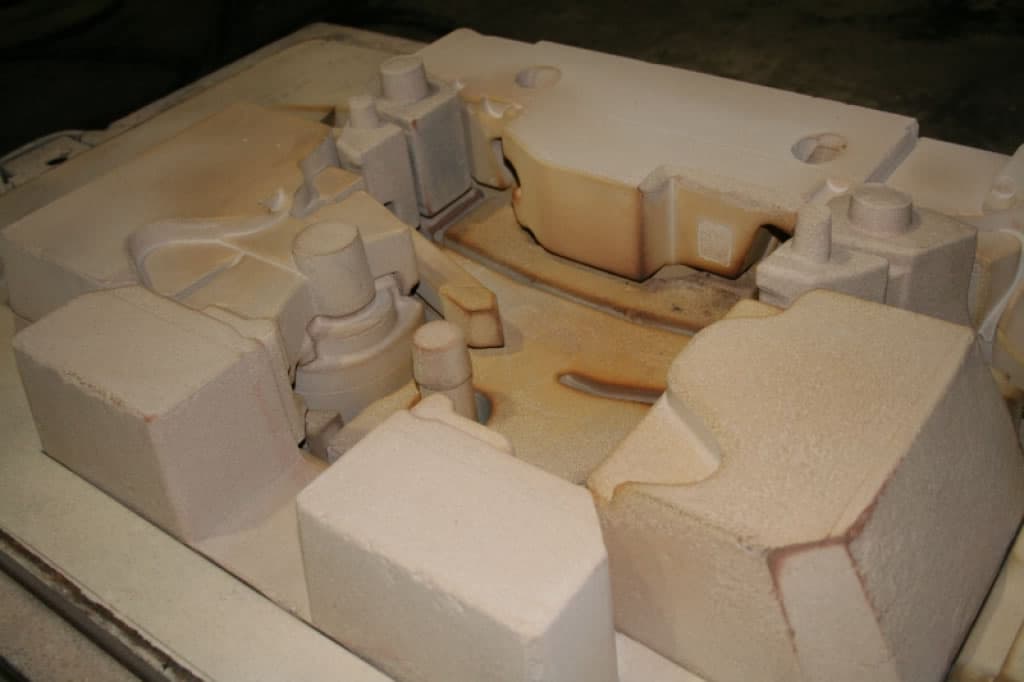
Unlike the green sand process, the sand pressed around the mould is mixed with thermosetting chemical binders and left to dry.
The higher costs for materials and the chemical disposal of the sand used make the process relatively less economical, but the excellent dimensional stability and surface finish are ideal for complex and large castings.
The company has an automatic production line for small batches and special castings. The highly specialised expertise of the staff is a key element in this process, as manual skill is essential to achieving high-quality results.
This production process guarantees high-quality castings with complex geometric configurations and wall thicknesses of less than 3.5 mm.
Castings ranging from a few grams in weight up to over 250 kg can be produced.
Rapid prototyping
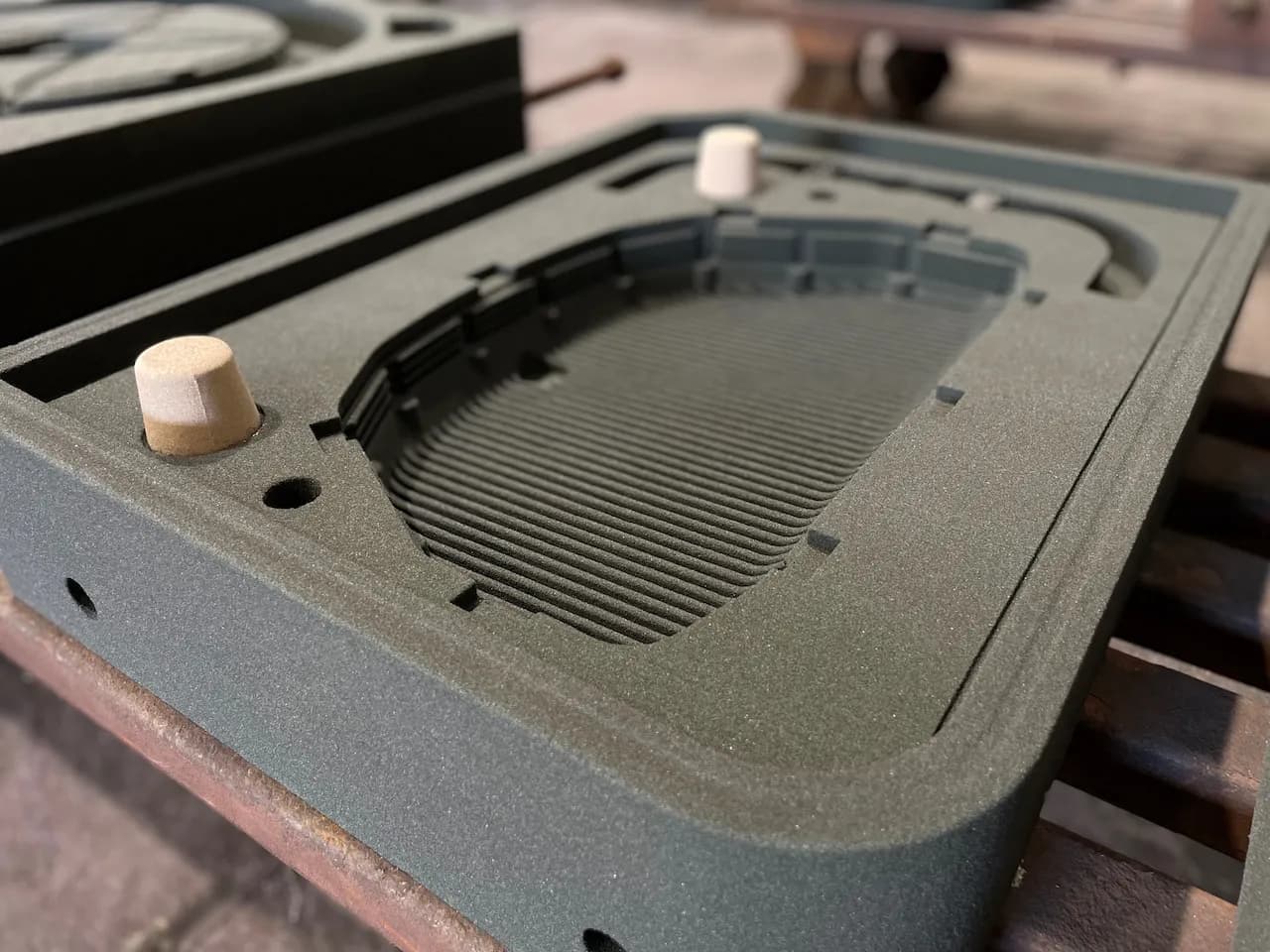
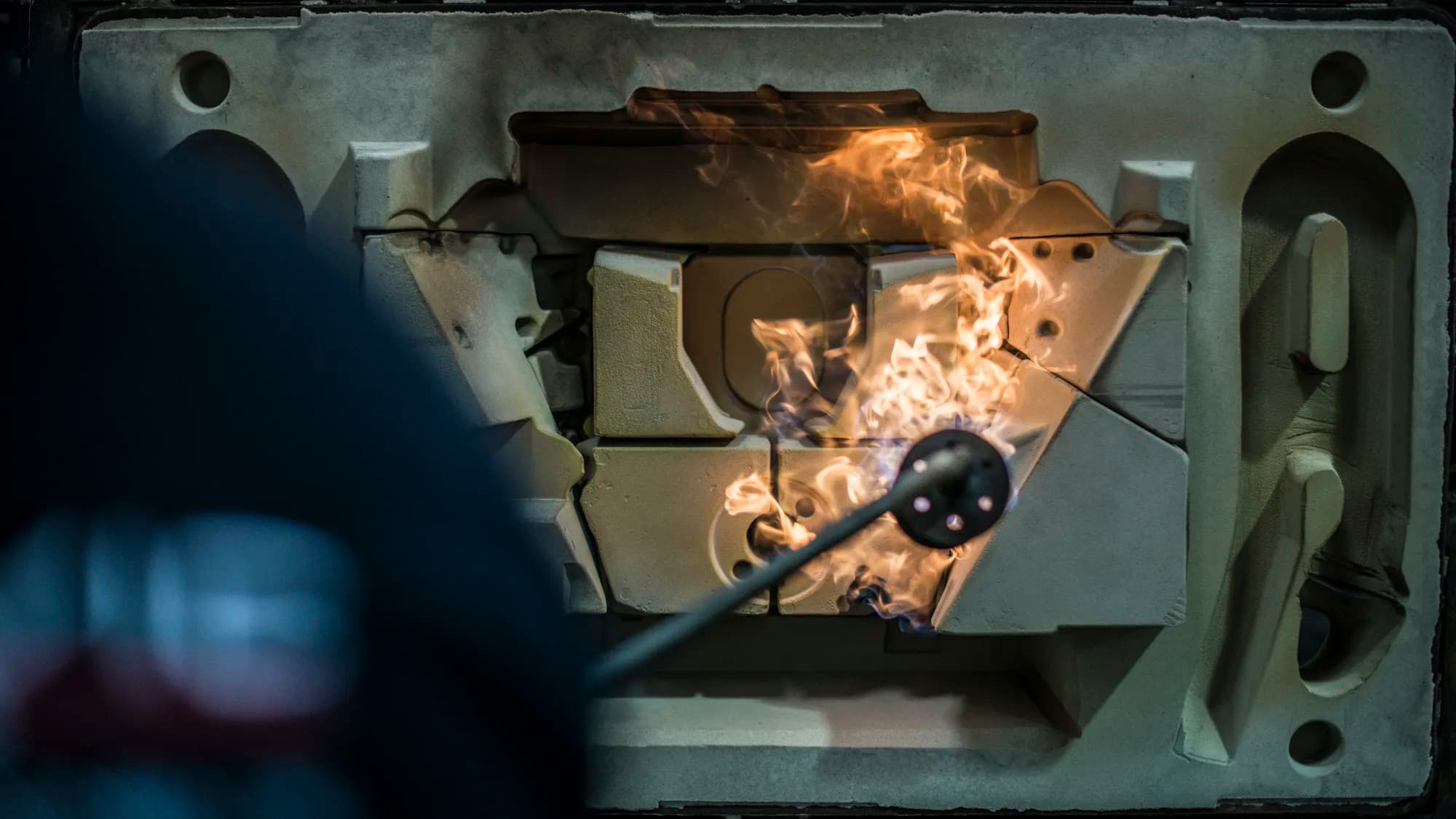
3D sand printing enables the production of sand moulds and cores, printed layer by layer, directly from the CAD design, following the design of the moulds to be printed and any necessary casting simulation, without the need to construct traditional foundry equipment.
In addition to reducing the initial investment required to start production and test the actual casting, this approach significantly reduces production times and offers high design flexibility, as it overcomes the geometric complexity of traditional modelling processes.
This production process guarantees high-quality castings with complex geometric configurations and wall thicknesses of less than 4 mm.
Dimensions are not a limitation, as it is possible to divide the print into several parts, which can then be reassembled to produce the final component of the desired dimensions.
Heat treatments, finish, and machining
Once cooled, the mould is broken open to remove the rough-cast part, which must then undergo rough machining, deburring and inspection.
Depending on the characteristics and specifications requested by the customer, the company can carry out heat treatment, inspections and mechanical machining in-house.
The range of surface finishes offered includes anti-corrosion treatments, powder coating and spray painting.
Heat treatments
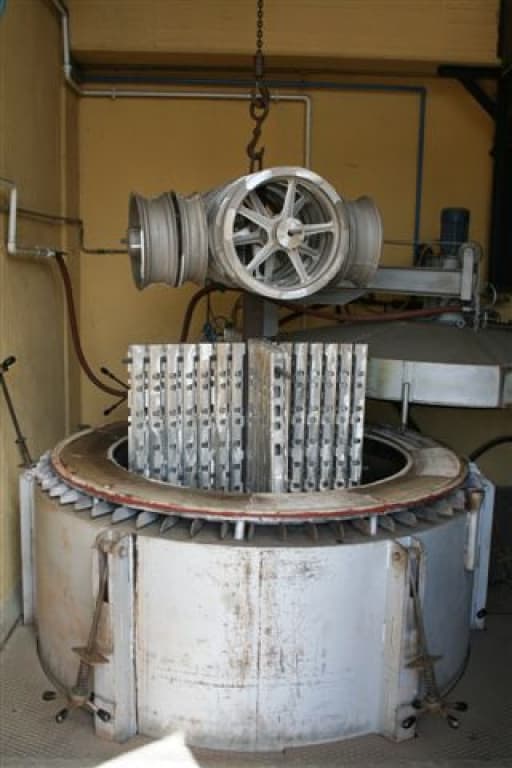
In order to significantly improve the mechanical properties of the alloys, and to eliminate any residual internal stresses, all castings undergo solution and ageing heat treatments.
The heat treatments are carried out in-house. The plant is equipped with automatic temperature detection and recording systems at five points, has a load capacity of 550 kg and ensures a temperature accuracy of +/-2°C.
The cooling of wheels and castings is carried out in a dedicated chamber, using forced air to accelerate the cooling process, as this further enhances the mechanical properties of the alloy.
Finishing
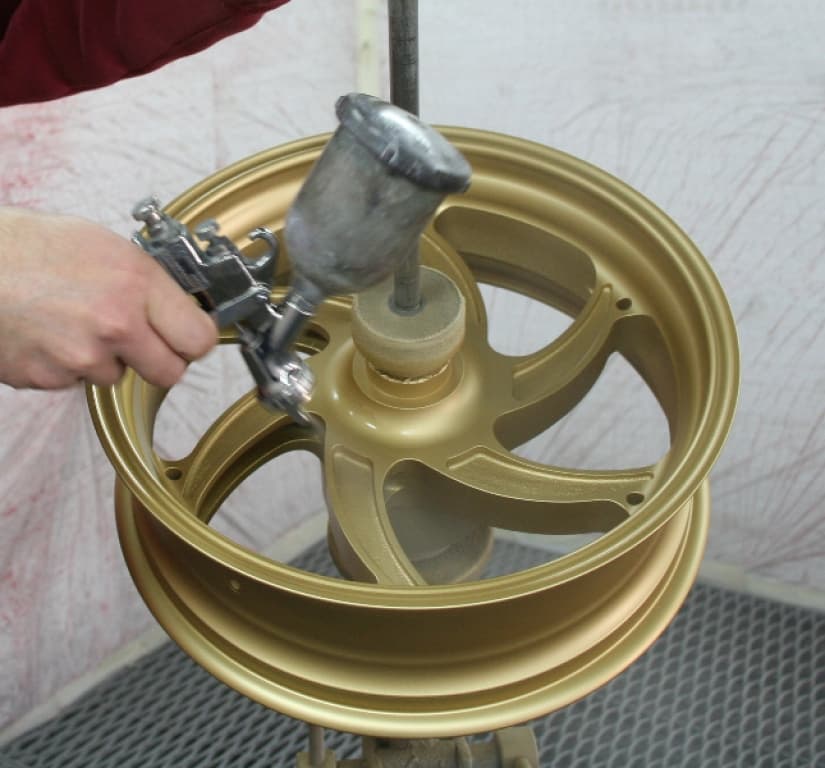
The finishing process involves removing flash, sprues and risers from the wheels and all castings using manual and semi-automatic equipment. During the finishing stages, two different types of blasting are carried out using carbon steel microspheres and corundum microgranules, to give the cast surface uniformity and compactness, improving its aesthetic appearance and significantly reducing its tendency to oxidise.
Where required, the company can carry out ultrasonic cleaning as well as high-pressure washing. Finally, various types of anti-oxidation and aesthetic surface treatments are offered, which can be carried out before or after mechanical processing.
Our constant commitment to supporting our customers throughout all production stages also enables us to provide assembly, pre-assembly and testing services.
Machining
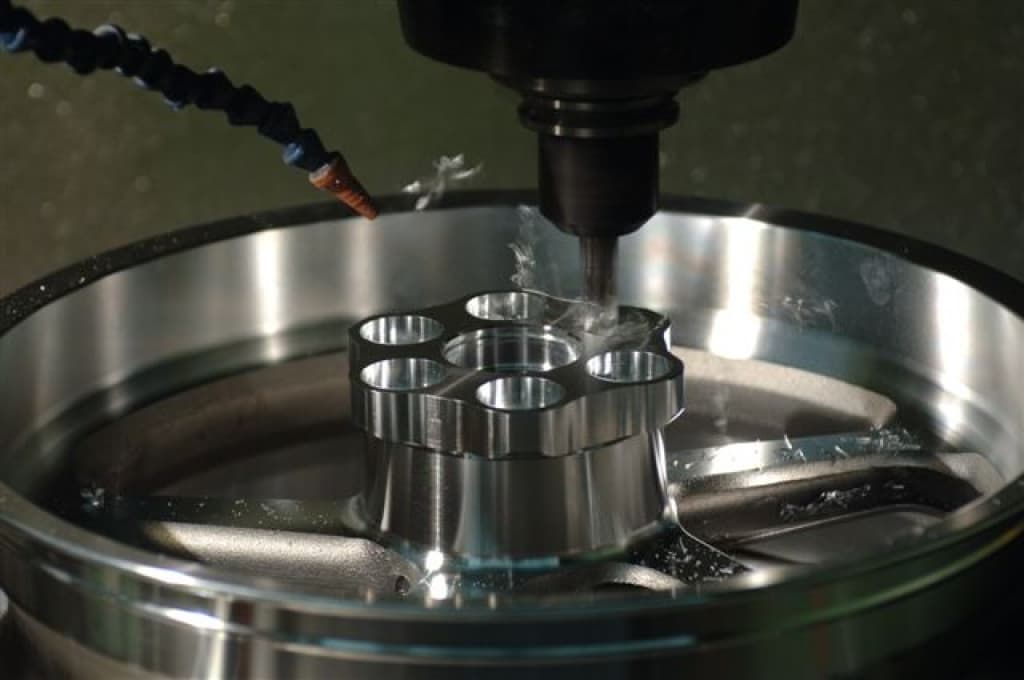
The company has an in-house workshop for mechanical machining, equipped with modern 5-axis machining centres and turning facilities for diameters exceeding 700 mm.
The company guarantees precise machining, with attention to the finest details and characterised by excellent quality standards, catering to both standardised operations and unique, bespoke projects. For more specialised requirements, the company collaborates with highly qualified external suppliers, bound by long-standing relationships and confidentiality agreements, ensuring finished products of the highest standard.
In this way, Marvic can respond efficiently to customer requests, offering high-quality solutions and finished products.